Reverse osmosis, ultrafiltration and nanofiltration are often presented as competing technologies. In real water treatment plants they are usually stacked, each removing a different size class of contaminant so the next stage can work reliably. Understanding what each membrane removes — and at what pressure — makes the system design much easier.
Quick comparison
| Technology | Approx. pore size / mechanism | Removes | Passes | Typical pressure |
|---|---|---|---|---|
| UF (ultrafiltration) | ~0.01 µm physical pores | Suspended solids, colloids, bacteria, viruses, macromolecules | Dissolved salts, small organics, water | Low (0.1–0.3 MPa) |
| NF (nanofiltration) | ~1–2 nm, solution-diffusion + charge | Divalent ions (hardness), colour, TOC, larger organics | Most monovalent salts, water | Low to medium |
| RO (reverse osmosis) | Dense solution-diffusion membrane | Nearly all dissolved salts, ions, organics, silica | Water (and a small fraction of salt) | High (brackish) to very high (seawater) |
Ultrafiltration: the physical barrier
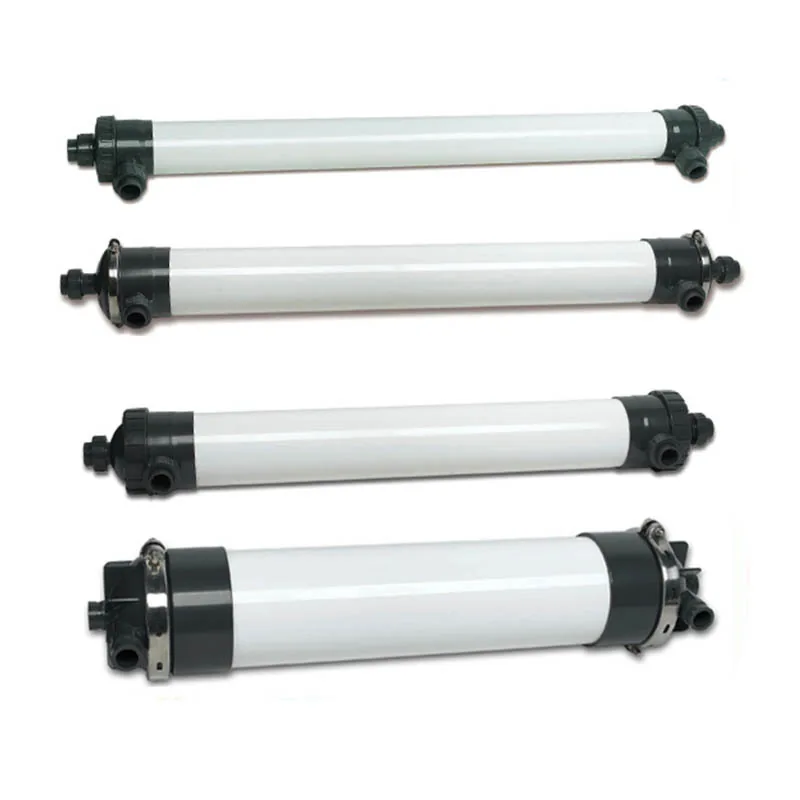
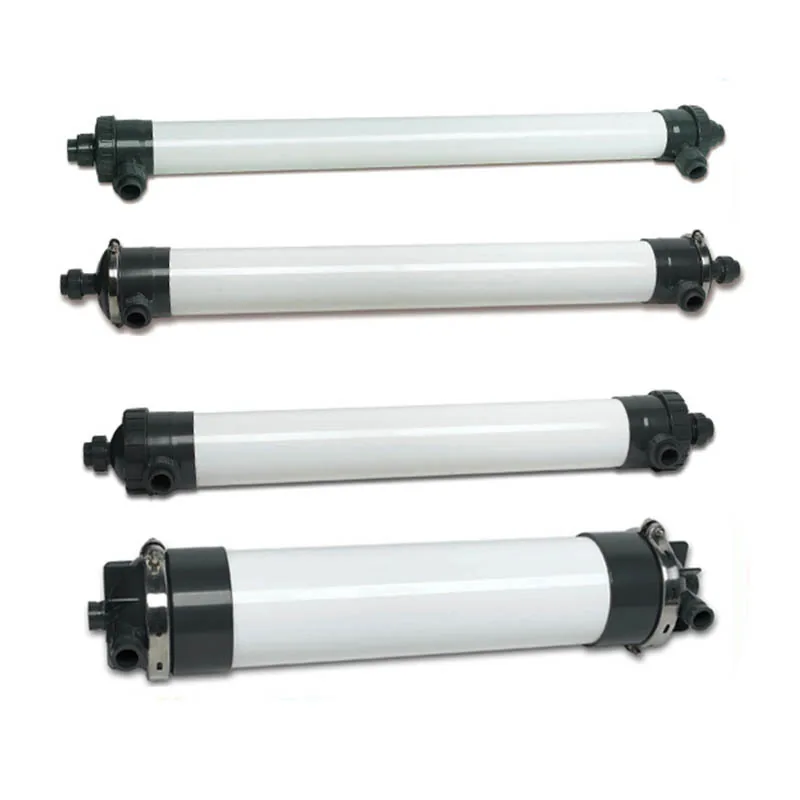
Hollow fiber UF modules are porous membranes that separate by size. They remove bacteria (>6 log on HUAMO HM series), viruses, colloids and suspended solids at low pressure and with modest energy use. Because dissolved salts pass straight through, UF cannot desalinate — but it is an excellent protector for RO, holding feed SDI15 below 3 and stabilizing water quality across seasonal changes.
UF is also the core of MBR systems, where it replaces the secondary clarifier in biological wastewater treatment, and of many food, beverage and bioprocess clarification duties.
Nanofiltration: selective separation
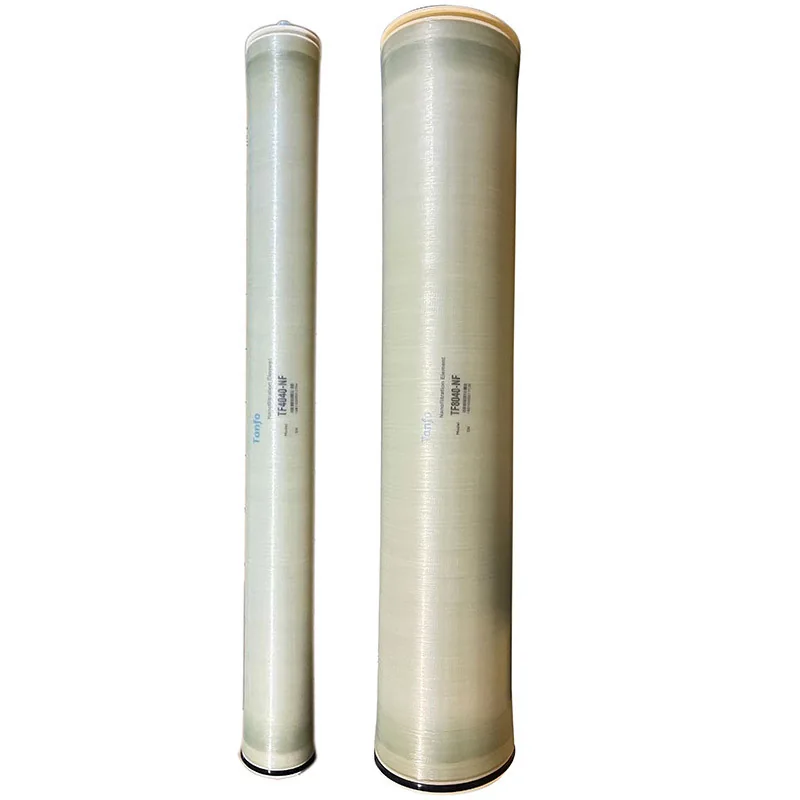
NF sits between UF and RO. Its ~1–2 nm structure and charged surface retain divalent ions such as calcium and magnesium while allowing much of the sodium and chloride to pass. That selectivity makes NF 280 series elements ideal for water softening, colour and TOC removal, THM precursor reduction, and concentrating products such as fruit juice or fermentation broths — all at lower pressure than RO.
It is the right choice when you want to remove hardness and organics without fully demineralizing the water.
Reverse osmosis: dissolved salt removal
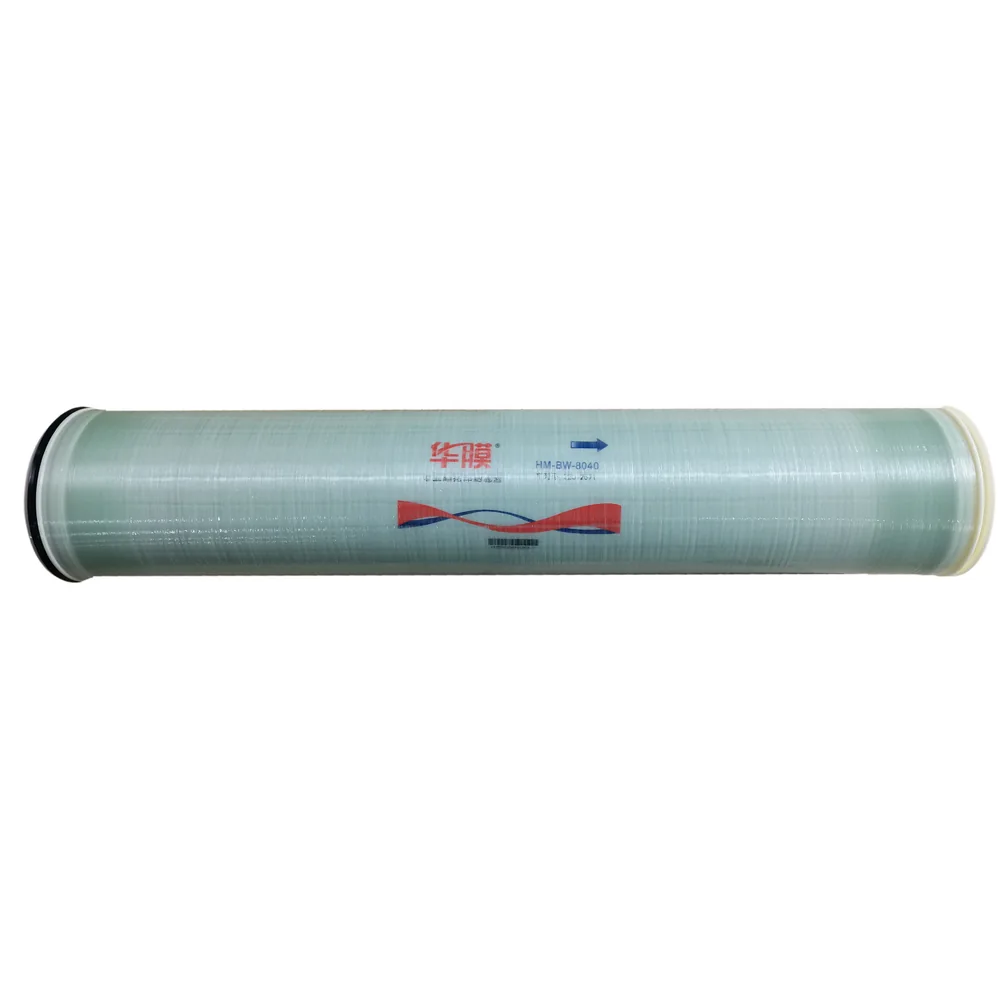
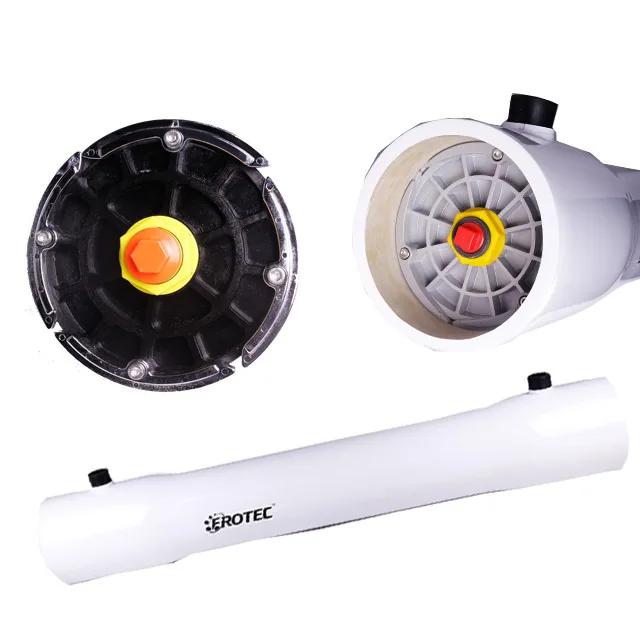
RO membranes are effectively non-porous; transport occurs by solution-diffusion under pressure. A brackish water RO element rejects the vast majority of dissolved salts, and a seawater SW element reaches 99.8% stabilized salt rejection under standard seawater test conditions. RO is the only one of the three that can produce potable water from seawater.
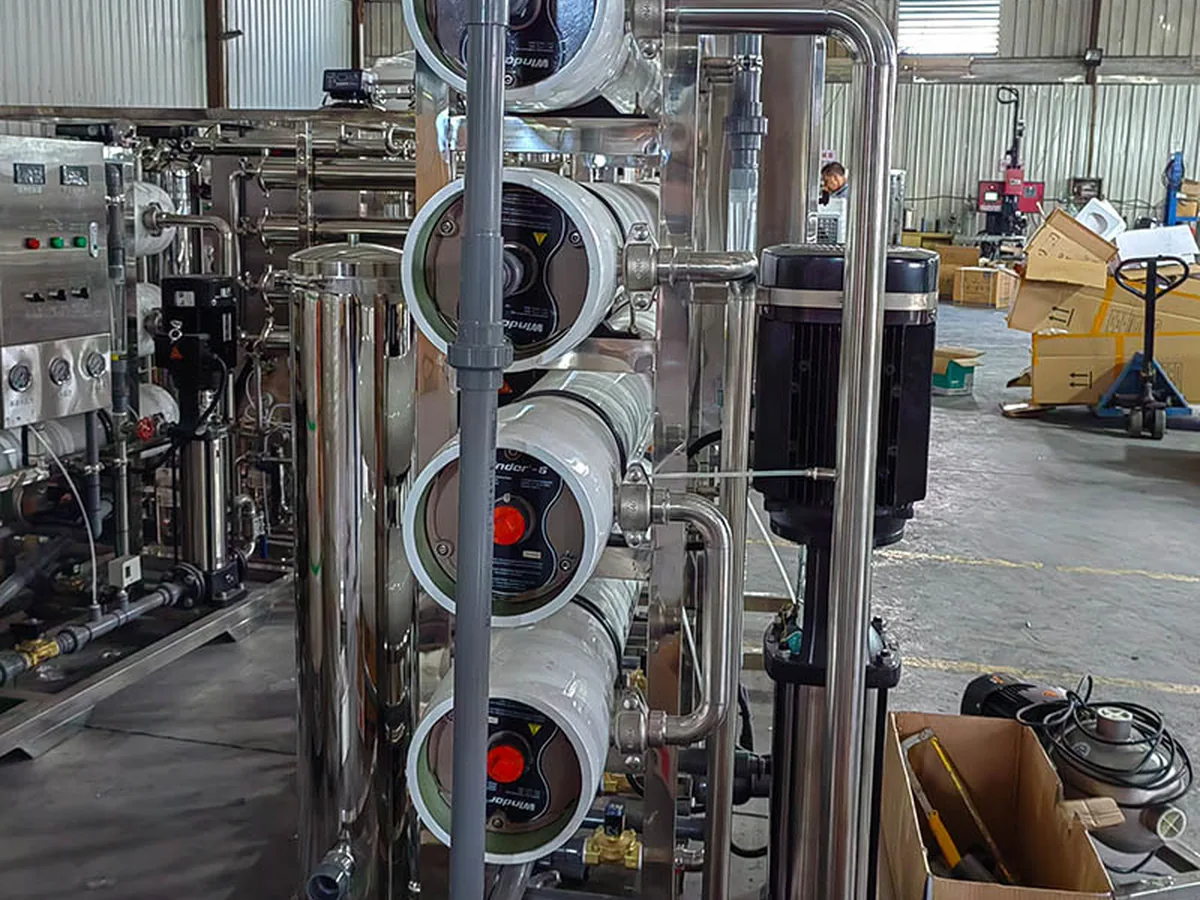
The trade-off is pressure and pretreatment. RO needs feed with low SDI, no free chlorine and controlled scaling potential, which is why UF and cartridge filtration commonly sit in front of it.
How they are combined
- UF → RO — the most common industrial configuration. UF provides a stable, low-SDI feed that protects RO from particulate and biological fouling.
- NF → RO — NF pre-softens and removes organics ahead of a high-recovery RO stage, reducing scaling and organic fouling.
- RO → EDI / polishing resin — for ultrapure water, RO removes the bulk ionic load and EDI or polishing resin finishes the job continuously.
- MBR → UF → RO — a full water-reuse train for municipal or industrial effluent.
Which one do you need?
If the goal is removing turbidity, bacteria and colloids, choose UF. If it is softening, colour or selective concentration, choose NF. If it is desalination or producing demineralized process water, choose RO — and protect it with UF where the feed warrants it.
Still unsure? Send us your raw water analysis and target quality and we will map out the treatment train with the right membrane at each stage.
Related questions
Can UF remove dissolved salts or hardness?
No. UF pores are far too large to retain dissolved ions. Use NF for hardness and organics or RO for near-complete salt removal.
Does NF produce drinking water from seawater?
No. NF passes most monovalent salts including sodium chloride, so seawater requires RO with seawater-grade elements.
Need help selecting a membrane?
Send your feed water analysis and target water quality. Our engineers will recommend a model, provide the datasheet and quote your quantity.
Contact our engineers