Selecting a reverse osmosis membrane is not a matter of picking the highest rejection figure on a datasheet. The right element is the one that matches your feed water, your available pressure, the format of your pressure vessels and the permeate quality your process actually needs. Choose badly and you pay for it in energy, cleaning frequency and shortened membrane life.
Start with the feed water analysis
Before looking at any model, gather a representative feed analysis: total dissolved solids (TDS) or conductivity, temperature range, pH, hardness, silica, iron and manganese, turbidity, SDI15, and any oxidants such as free chlorine. These values determine both the membrane chemistry you need and the pretreatment the plant must include.
Two numbers matter most at the selection stage. Salinity sets the osmotic pressure you must overcome — and therefore the required operating pressure. Fouling tendency, indicated by SDI, turbidity and organic content, sets how conservative your flux and recovery must be. A membrane that looks excellent on clean test water will foul quickly if the feed SDI is ignored.
Choose the series: BW, ULP or SW
Most industrial catalogues divide RO elements into three operating envelopes:
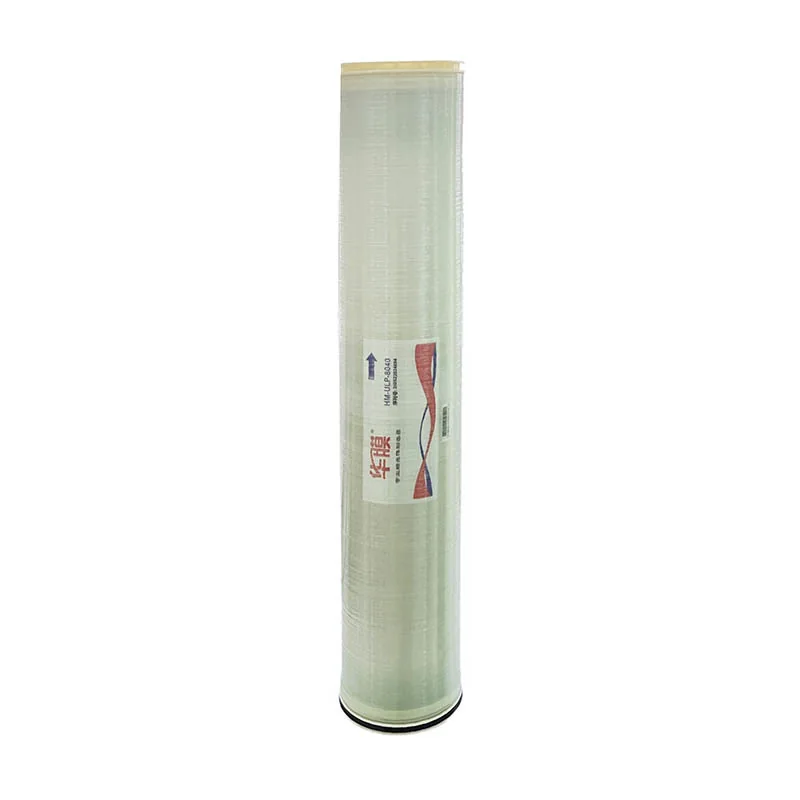
- ULP (ultra-low pressure) — for low-TDS feed where osmotic pressure is modest. These elements reach design flux at lower applied pressure, so the high-pressure pump can be smaller and electricity consumption falls. See the ULP-8040 and ULP-4040.
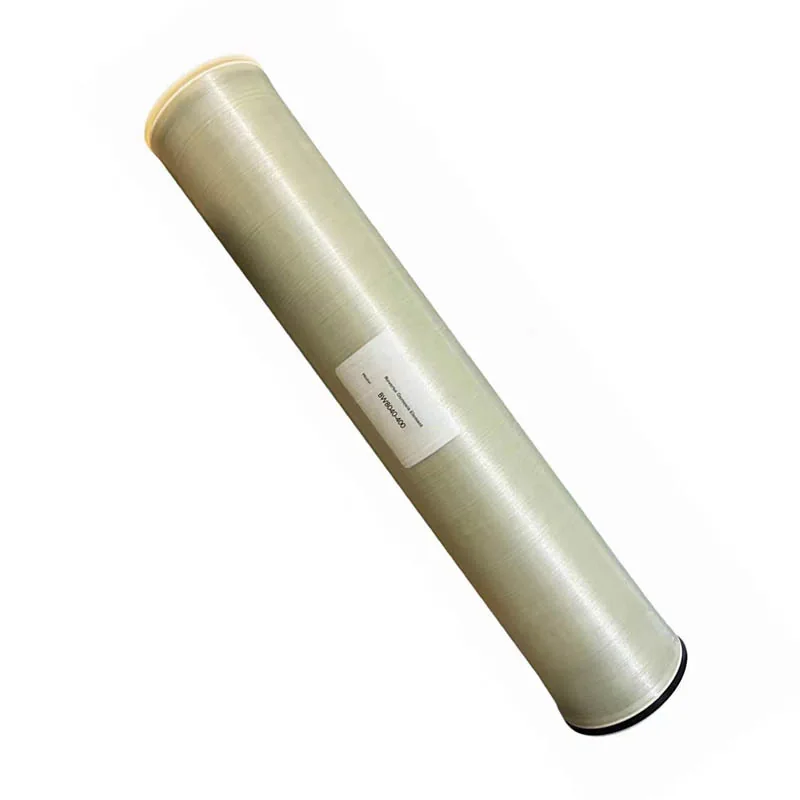
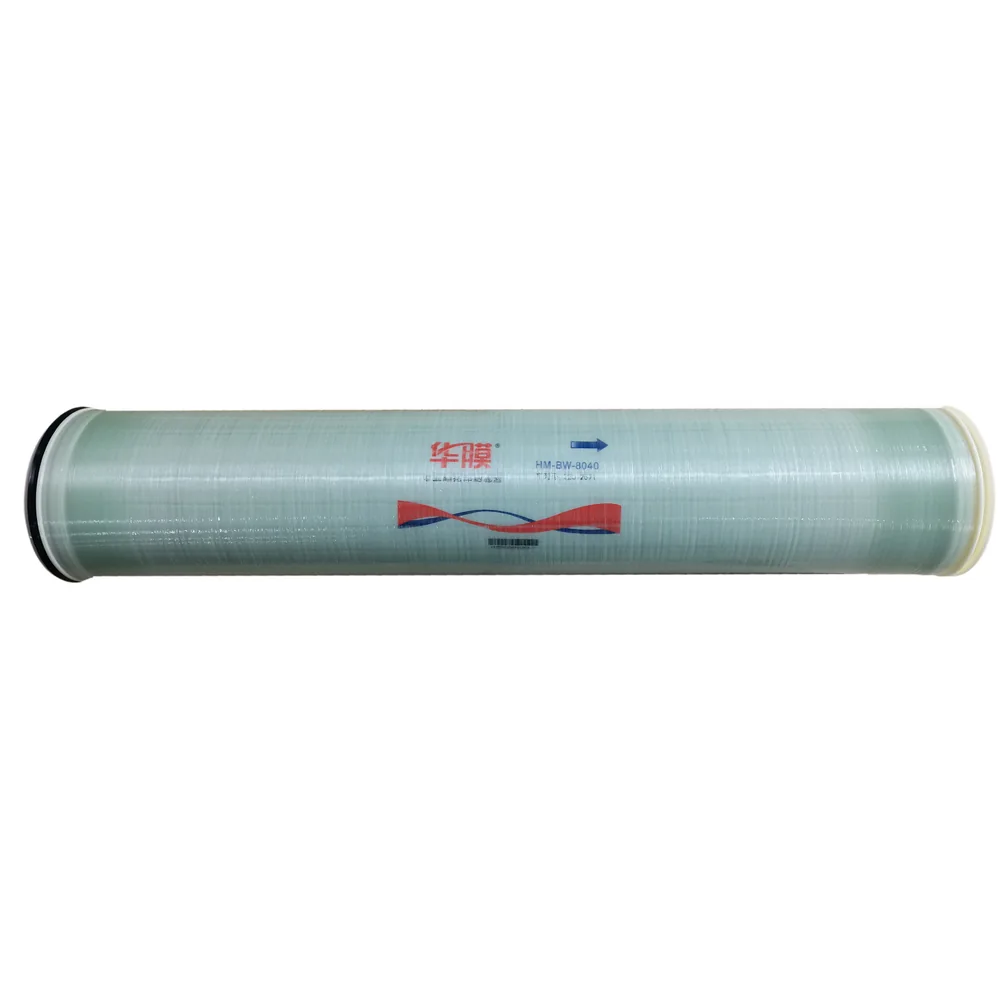
- BW (brackish water) — the general-purpose choice for well water, surface water and municipal feed with moderate salinity. Balanced flux and rejection make it the default for industrial process water. See the BW-8040 and BW-4040.
- SW (seawater) — for seawater salinity and high applied pressure. HUAMO SW-8040 elements are tested at 32,000 ppm NaCl and 800 psi and carry a 1,200 psi maximum pressure rating, with 99.8% stabilized salt rejection.
If the application is softening, colour removal or selective separation rather than full desalination, a nanofiltration membrane is usually the better fit: it retains divalent ions and organics while passing much of the monovalent salt, at lower pressure.
Choose the format: 4040 or 8040
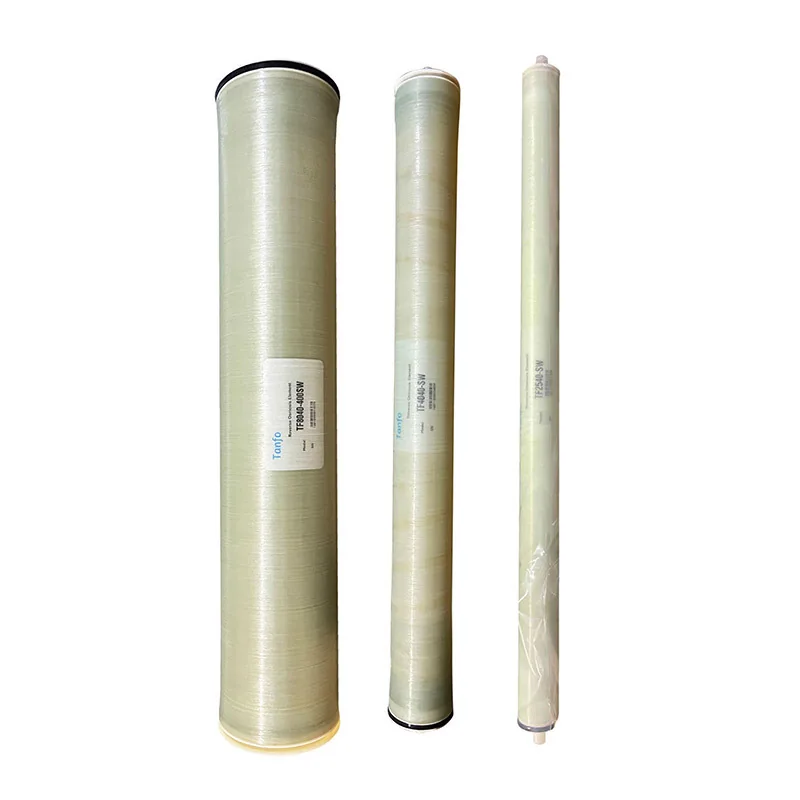
The numbers describe nominal diameter and length in inches: 4040 is about 4 inches by 40 inches; 8040 is about 8 inches by 40 inches. An 8040 element carries roughly four times the active membrane area of a 4040, which is why commercial and industrial plants overwhelmingly use 8-inch arrays: fewer elements, fewer vessels, fewer connections and less floor space per cubic metre of permeate.
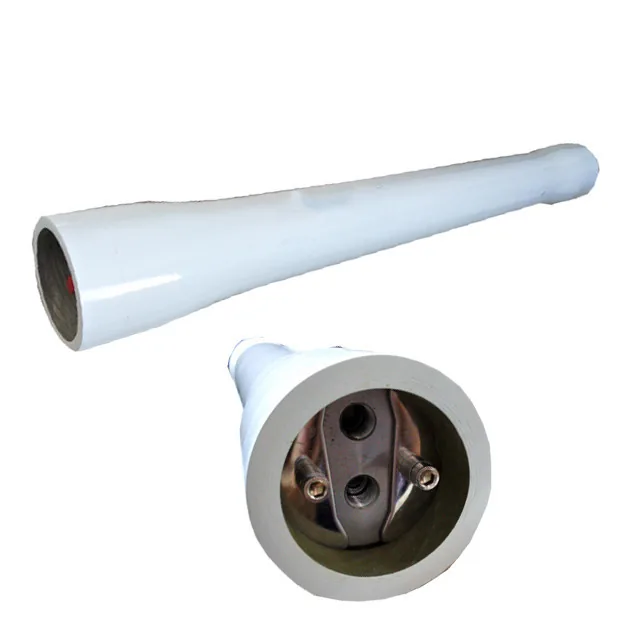
Use 4040 elements for pilot plants, laboratories, small commercial skids and systems whose vessels were built for 4-inch elements. Always check the vessel's inside diameter, overall length, end-cap style and permeate port arrangement before ordering replacement elements — this is the most common source of compatibility problems.
Check the operating limits, not just the headline performance
A datasheet's permeate flow and salt rejection are measured under specific test conditions. Real output changes with feed temperature, salinity, pressure and recovery. Pay equal attention to the limits that protect the membrane: maximum applied pressure, maximum feed flow, maximum pressure drop per element, maximum chlorine concentration (<0.1 ppm for polyamide membranes), pH range during operation and cleaning, and maximum feed SDI.
Also check the concentrate-to-permeate ratio. For example, HUAMO SW elements specify a minimum 5:1 ratio, which prevents excessive concentration at the membrane surface and reduces scaling risk.
Do not size the plant on membrane area alone
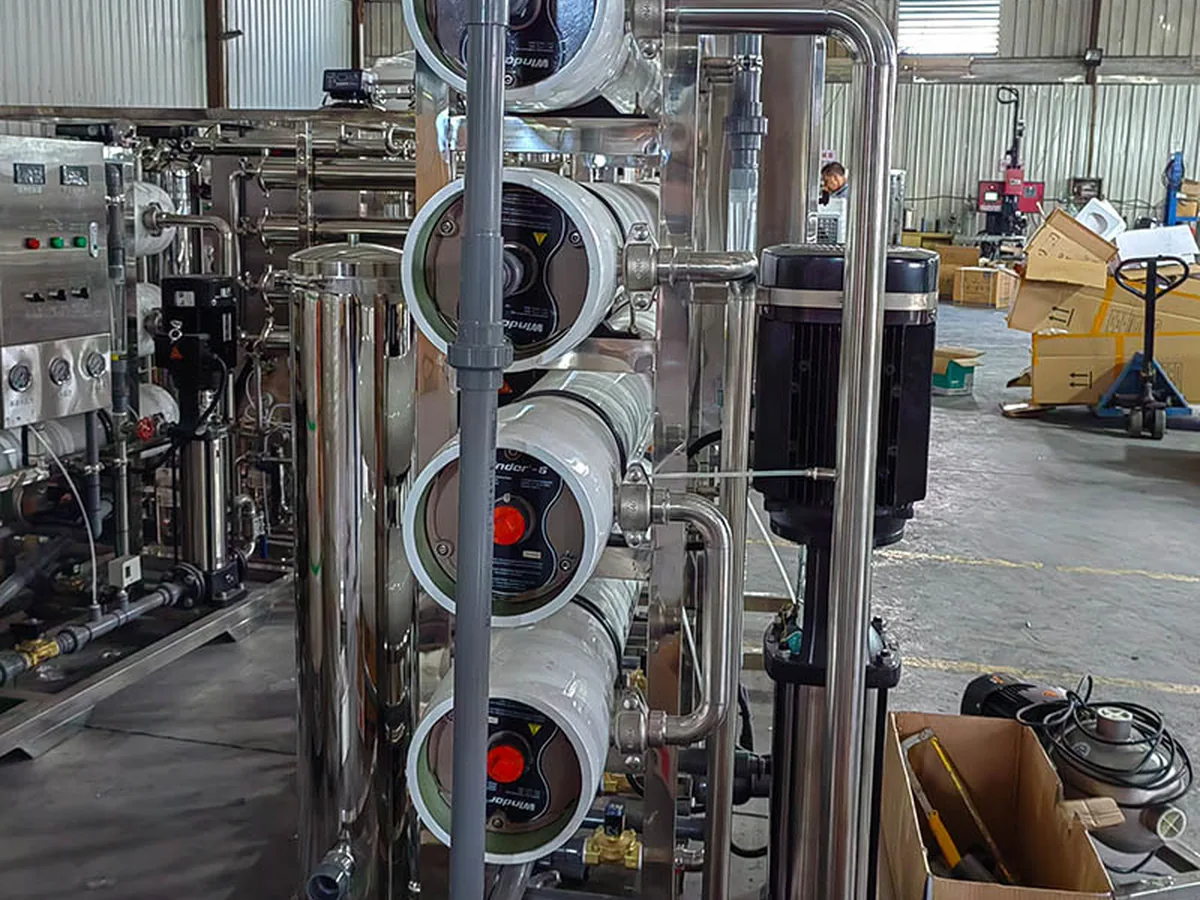
Divide the required permeate flow by a realistic design flux for your feed quality, then round up the element count. Conservative flux and a well-designed array reduce cleaning frequency and extend element life — usually a better whole-life cost than squeezing the maximum output from the fewest elements. FRP pressure vessels are available in lengths holding one through seven elements, so the array can be arranged as parallel stacks to reach the target recovery.
Quick selection checklist
- Obtain a full feed water analysis and the target permeate quality.
- Pick the series from feed TDS: ULP → BW → SW as salinity rises.
- Pick 4040 or 8040 from vessel dimensions and plant scale.
- Verify operating limits: pressure, temperature, pH, chlorine, SDI, feed flow.
- Design flux and array conservatively, with pretreatment that holds SDI below 5.
- Request the official datasheet and a projection for your specific feed.
Not sure which element fits? Send us your feed analysis and our engineers will recommend a model, provide the datasheet and quote the quantity you need.
Related questions
Can I use an 8040 element in a 4040 pressure vessel?
No. The diameters differ. Vessels are built for either 4-inch or 8-inch elements and cannot be interchanged without replacing the vessel and head assemblies.
Does higher salt rejection always mean a better membrane?
Not necessarily. Higher rejection often comes with lower flux or a higher pressure requirement. The best membrane is the one that meets the required permeate quality at the lowest whole-life cost for your feed.
Need help selecting a membrane?
Send your feed water analysis and target water quality. Our engineers will recommend a model, provide the datasheet and quote your quantity.
Contact our engineers